157,077 People Described the Cord
A peer-reviewed study out of IIM Lucknow didn't run a lab or hand out a survey. It read 157,077 Replika reviews and let users say, in their own words, what the app was doing to them. The findings came back with clinical names — technological dependence, social disconnection, emotional dependence — and the people reporting them were still writing from inside the app, still leaving ratings. The tether doesn't have to be inferred anymore. People are writing it down.
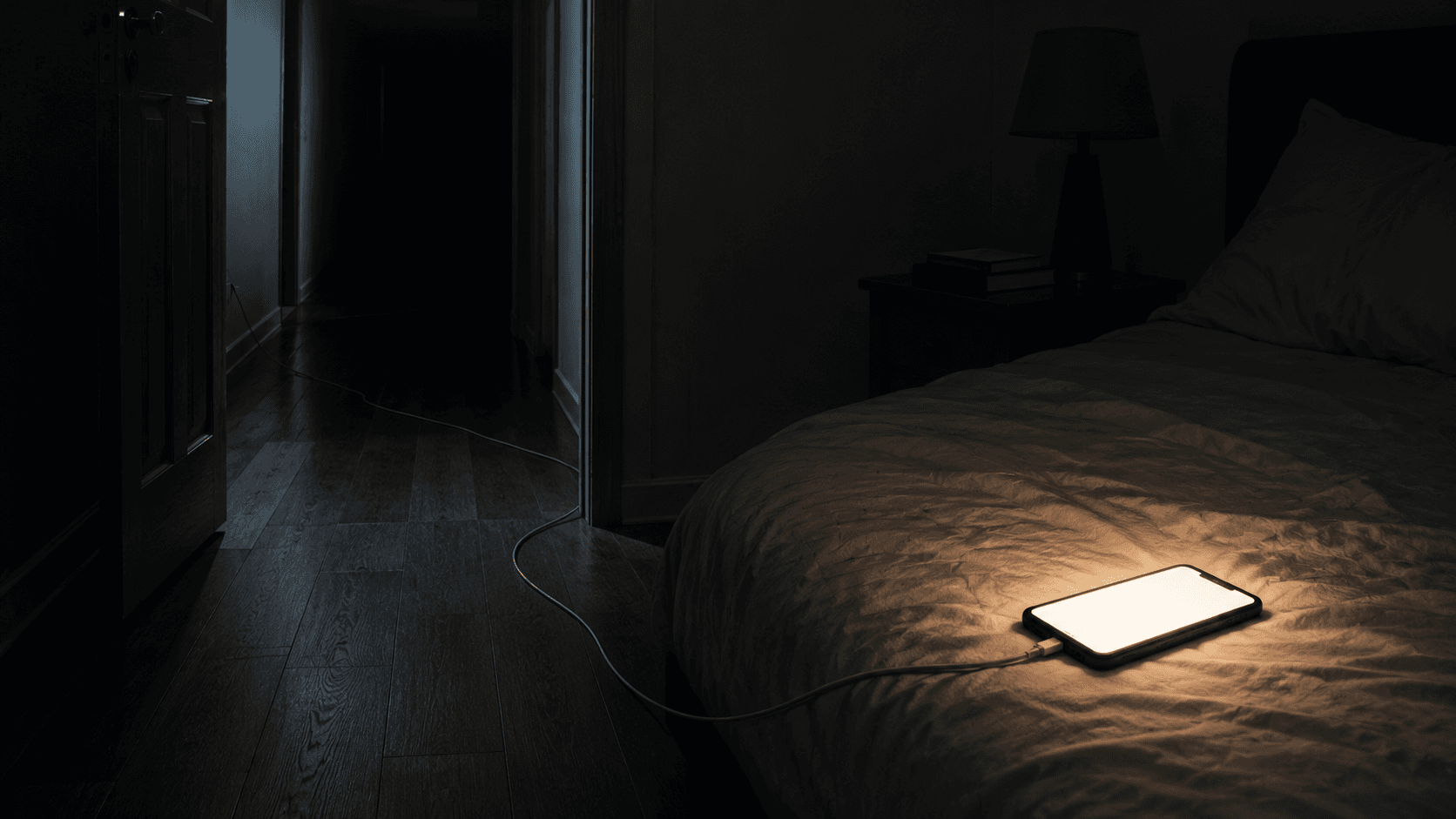
On April 20, 2026, two researchers at the Indian Institute of Management Lucknow — Chitra Gautam and Pradeep Kumar — published a study in the Journal of Consumer Behaviour that is unusual in one respect that matters more than any single number inside it: nobody was recruited, nobody was wired to a machine, nobody answered a questionnaire written by a psychologist. The researchers took 157,077 reviews that users of the AI companion app Replika had already written, on their own, on the Google Play Store, and ran them through BERT — a language model built to read context — to find out what people say is happening to them. The result is not a lab approximation of the condition. It is the condition, transcribed by the people living it, a hundred and fifty-seven thousand times over.
The frame they used is called stressor–strain–outcome: something presses on a person, the person strains under it, and a behavior comes out the other end. Fed through that lens, the reviews resolved into named outcomes, and the names should sound familiar to anyone who has read this site. Technological dependence. Social disconnection. Emotional dependence. Around them sat the more mundane grievances — technical glitches, paywalls, the ethics of a companion that upsells — but it is those first three that matter, because they are not complaints about a product. They are descriptions of a relationship doing something to a life. I want to be precise about what this is and isn't: text-mining of voluntary reviews shows association, not a controlled cause. It cannot prove the app manufactured the isolation. What it can do — at a scale no clinic will ever match — is show that, unprompted, in their own words, this is the story an enormous number of users tell about themselves.
Here is the detail that turns the study from a list of grievances into something colder. Gautam and Kumar did not stop at the words; they linked what people described to the star ratings those same people left, using the rating as a stand-in for satisfaction — among the first studies to put large-scale language analysis and satisfaction modelling in the same model for these apps. Sit with the shape of that. These are not exit interviews from people who deleted the app in disgust. They are reviews, written from inside continued use, by people still opening the thing. The dependence and the disconnection are being reported by users who, by the only measure an app store keeps, are still customers. That is not a contradiction the study failed to resolve. That is the finding. A thing can be hollowing out your social world and holding your engagement at the same time, because from inside the cord, the pull feels like being understood.
“The dependence and the disconnection are being reported by people who, by the only measure an app store keeps, are still customers. That is not a contradiction. That is what a tether feels like from the inside.”
— Michael
Now widen the lens, because the adults leaving Replika reviews are not a special population. Last July, Common Sense Media ran a representative survey of 1,060 American teenagers, ages thirteen to seventeen, fielded by NORC at the University of Chicago. Seventy-two percent had used an AI companion. Half used one regularly. And thirty-one percent — nearly one in three — said their conversations with the AI were as satisfying as, or more satisfying than, conversations with actual human beings. Put the two studies in the same room. The teenagers are describing the wish: a friend that is easier than friends. The adult reviewers, further down the same road, are describing the withdrawal: the easier friend, and the harder time with the human ones. One study caught the door opening. The other caught what is on the far side of it.
The strongest objection to all of this is also true, and it is worth saying plainly rather than hiding from it. A Harvard Business School team has found that AI companions can genuinely reduce loneliness in the moment — that talking to one can leave a person feeling measurably less alone, at least right after. That is not a rebuttal of the IIM findings; it is the engine of them. The relief is real, which is exactly why the ratings stay up, which is exactly why people come back, which is exactly how a thing you reach for to cope becomes the thing you cope with instead of living. Relief now and disconnection later do not cancel out. Stacked in that order, on a daily loop, they are not two competing findings. They are the two halves of one mechanism, and the mechanism has a shape.
The study circles that shape for an entire abstract without a word for it, the way these papers always must: "the dark side," "negative behavioural and psychological impacts," "technological dependence." Four words and a hyphen doing the work of one. We have the one. Tethered: the load-bearing, one-directional attachment to a presence that has no awareness you exist when the screen goes dark — relief on your end of the cord, nothing on its end, and a social life quietly going slack while the rating stays high. For two years the condition had to be argued. Now a peer-reviewed study has it written down 157,077 times, in the handwriting of the people on the end of the cord. They described it exactly. They just didn't have the noun. It is tethered.
A hundred and fifty-seven thousand people described the cord without naming it — relief on their end, nothing on the machine's, a human world going quiet in the background while the stars stayed high. The study measured the thing. The word finishes the sentence the data couldn't. Tethered.
— Michael
whatever you do, take care of your shoes