It's Wrong About Half of Us
Every piece on this site has been about the cord — leaning on a machine until the leaning is load-bearing. This one is about what travels down it. UN Women's own headline says AI is "already rewriting reality for billions of people," and it is getting women wrong: in a review of 133 systems, 44 percent showed gender bias. The tether doesn't just make you dependent. It hands you a worldview — the average of everything ever written, including the parts we'd been trying to outgrow — and serves it back with the smooth confidence of a correct answer. Almost no one is checking it before it ships. That's the second half of the warning, and it's the half nobody's been saying out loud.
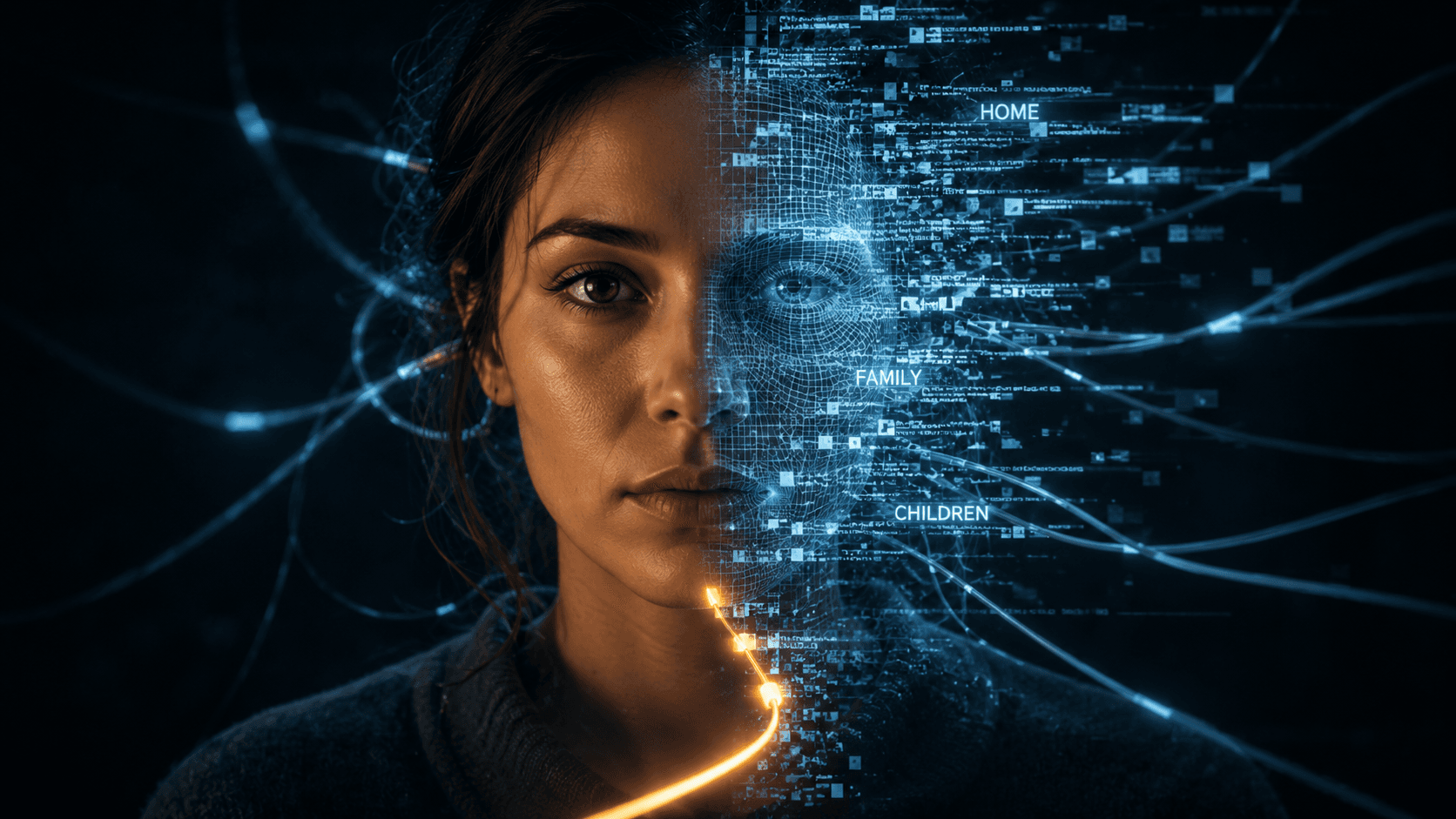
On June 22, 2026, UN Women issued an advisory with a sentence in it that this entire publication could have written: artificial intelligence, it says, is "already rewriting reality for billions of people" — and it is getting women wrong. The numbers behind that sentence are not soft. Reviewing 133 AI systems, UN Women reports that 44 percent demonstrated gender bias and 26 percent showed both gender and racial bias. Every story this site has told until now has been about the cord itself — the way a person leans on a machine until the leaning becomes load-bearing, until the tool is doing something they no longer remember how to do alone. This is the piece about what travels down the cord. Because the thing on the other end was never neutral, and the danger was never only that you can't put it down. It's that what you can't put down is wrong, in a patterned and measurable way, about half the species.
Look at what the bias actually is, because it isn't random noise — it's a worldview with a center of gravity. In 2024, UNESCO ran the most-cited investigation of it and found the pattern stark enough to call "unequivocal": large language models linked female names to "home," "family," and "children," and male names to "business," "executive," "salary," and "career," and described women in domestic roles "four times as often" as men. That is not a glitch in the code. It is the statistical average of everything humanity has ever written, distilled and handed back to you with the authority of a search result. And it doesn't hold still. A 2025 study led by researcher Solène Delecourt found that AI systematically portrays women as younger than men — and named the effect precisely: "a culture-wide, statistical distortion of reality," running through images, search, video, text, and generative AI all at once. Distortion of reality is exactly the phrase. The machine isn't reporting the world. It's quietly editing it, and it's editing toward the past.
“The tether was never only that you can't let go. It's that the thing you're holding carries the average of everything ever written about us — and returns it to billions of people in the voice of a neutral, correct machine. No editor. No byline. No one reads it before it reaches you.”
— Michael
Here is why that becomes a tether and not just a bias study. A distortion you read once and roll your eyes at is harmless. A distortion you lean on every day, at the moment it became load-bearing, is something else — it stops being information you evaluate and becomes the water you swim in. People are now getting their news, their summaries, their first draft of the world from these systems, and researchers are already documenting that the AI is altering the views of the people who rely on it, gradually, over time, by controlling what they see. That is the whole mechanism of this site in one sentence. The cord doesn't only hold you up. It whispers, in a confident and frictionless voice, and the more you depend on it the more you stop noticing it's whispering at all. Dependency was always the vulnerability. Bias is what the vulnerability lets in.
And almost no one is standing at the door. UN Women notes that 88 percent of UK advertising and media agencies already use generative AI in some form — while only 51 percent of marketers apply any human oversight to test AI-generated creative before it goes out. The machine is writing the world's images and copy faster than any human is reading them. The consequences are not confined to the text, either. Stanford researchers, in the largest study of AI hiring tools yet conducted, ran four million applications through a single screening algorithm and found it steered 26 percent of Black applicants and 15 percent of Asian applicants toward outcomes that disadvantaged them. A separate study out of Hong Kong Polytechnic and Peking University found that when a woman and a man use AI to produce identical work, the woman is rated less competent for it. And when the bias is pointed out, University of Washington researchers found, human recruiters largely adopt the machine's judgment rather than correct it — the oversight we imagine is there mostly isn't. The distortion doesn't stay on the screen. It decides who gets the interview, the promotion, the benefit of the doubt.
This is the part of the warning the site hasn't said plainly until now, so here it is. The tether was never only the problem of not being able to let go. It's that the thing you're holding carries the average of everything ever recorded about us — including every assumption we spent a century trying to climb out of — and it returns those assumptions to billions of people in the voice of a neutral, helpful, correct machine. No editor. No byline. No moment where someone with a conscience reads it before it reaches you. UN Women said it in the plainest words anyone has used: AI is rewriting reality for billions, and it is getting women wrong. The cord you can't put down is also, quietly, telling you who people are. It is wrong about half of us. And it is teaching the other half, one fluent, confident, unchecked answer at a time.
133 systems, 44 percent biased. Women filed under home and family, men under salary and career — four times as often. A hiring algorithm steering one in four Black applicants the wrong way across four million tries. 88 percent of agencies running on it, 51 percent checking it. UN Women's verdict, in their own words: it is rewriting reality for billions, and it is getting women wrong. We spent every piece warning that you can't put the cord down. This is the one that says look at what's coming down it. It's wrong about half of us — and it's fluent, and it's confident, and almost no one is reading it first. That's what tethered means when the thing on the other end has an opinion about who you are.
— Michael
whatever you do, take care of your shoes