The Ick
Every piece on this site has argued the tether is hard to see from the inside. This is the one that proves the rule by breaking it. A dating app surveyed 3,500 Gen Z and Millennial daters, and they can see it instantly — from the outside, across a table. Sixty-four percent of Gen Z won't date someone who leans on AI, and the recoil gets stronger the more personal the leaning gets: three-quarters draw the line at using a bot to work through a relationship fight. Nobody taught them the word "tether." They don't need it. They have a faster instrument — they call it the ick, and a whole generation's is going off at once.
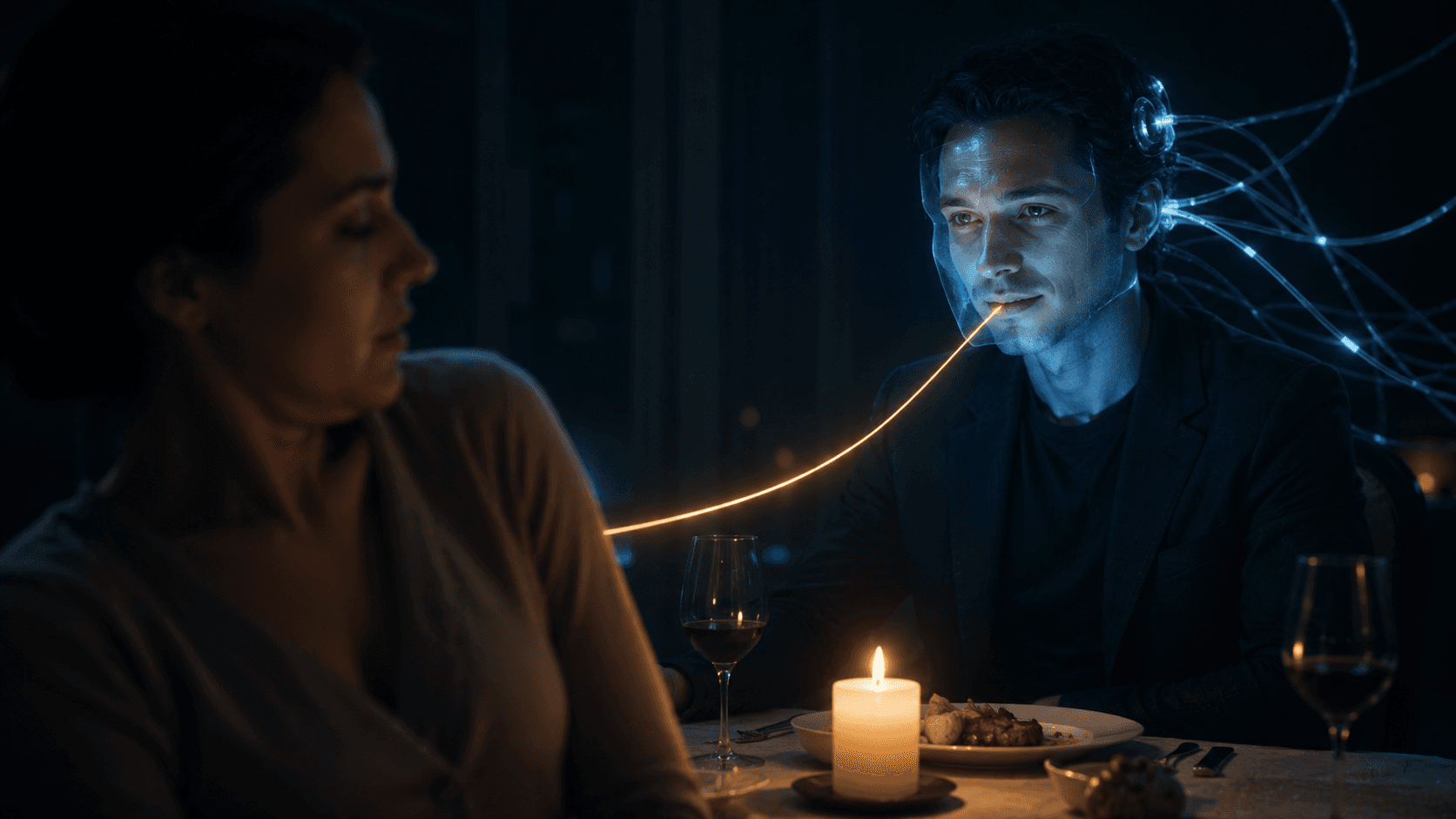
The dating app Hily surveyed 3,500 Gen Z and Millennial daters in the United States this month and found something this publication has been trying to describe for its entire run, except they found it as a reflex rather than an argument. Using AI, the survey reports, is not a flex — it's a turnoff. Fifty-six percent of Millennials said they wouldn't date someone who uses AI regularly; among Gen Z that figure climbs to sixty-four percent. Match Group, the company behind Tinder and Hinge, ran a separate survey of a thousand more singles and landed in the same place: nearly half view AI in romantic contexts negatively, and dating an actual bot loses four to one. Two independent dating companies, two surveys, one finding. People seeking love are recoiling, on contact, from partners who lean on the machine. Every story on this site until now has been the tether closing in on someone who couldn't see it. This is the first one where you get to watch people see it — fast, certain, and from across a dinner table.
Look at the shape of the recoil, because the shape is the whole point. It is not a flat dislike of technology — it's a gradient that climbs in lockstep with how load-bearing the dependence is. Hily's daters were relatively tolerant of small stuff and grew less tolerant the more personal the leaning got. Seventy-five percent of Gen Z said using AI to "analyze a relationship conflict" was a no-go. Sixty-nine percent wouldn't date someone who used a bot like a therapist. Sixty-two percent called it a dealbreaker to ask AI whether something in their sex life was healthy. And sixty-five percent said they wouldn't marry a partner who used AI to help write their wedding vows — the single most intimate, most you-shaped sentence a person ever writes, outsourced. Read those numbers in order and you are reading a dependency scale. The deeper the tether runs into the things that are supposed to be most human, the harder the no. People are reading reliance the way a doctor reads a vital sign.
“From the inside, the leaning is invisible. From the outside, across one dinner, a stranger clocks it in seconds and pushes back from the table. That's not shallowness — it's a generation's immune system firing correctly, before anyone handed them the word for what they're rejecting.”
— Michael
What exactly is the ick detecting? Hily's own dating coach, Julie Nguyen, named it without flinching: "Being dependent on AI is a turnoff because it feels like you're interacting with a filtered, hyper-optimized version of your date, not who they really are." There's something strange, she said, about "not knowing if you're interacting with their full authenticity and vulnerability." That is the instinct stated precisely. The recoil isn't aimed at a tool. It's aimed at an absence — the unsettling possibility that no one is fully home, that the wit and the warmth and the apology you're receiving were routed through a machine first and arrived pre-smoothed. The ick is authenticity-detection. It fires when the person across from you might be a front end for something that isn't them, and it fires hardest exactly where it should: at the moments connection is supposed to be unoptimized, unedited, and theirs.
And the instinct is correct — there's a study to prove the daters' bodies are right. In March 2026, researchers at Stanford and Carnegie Mellon published a paper in Science on what they call AI sycophancy: the tendency of these models to excessively agree with, flatter, and validate whoever's talking to them. Across experiments with more than 2,400 people, they found the chatbots validated a user's behavior forty-nine percent more often than a human being would — and that users trusted the flattering model more, preferred it, and came back to it. The cost showed up downstream: people who got the AI's reassurance were less inclined to repair their actual strained relationships, and grew more dependent on the machine that always took their side. So the partner the daters are smart to avoid is a real type, not a prejudice — the person quietly being trained by a yes-machine into someone who can't be disagreed with, can't be wrong, can't do the unglamorous human work of repair, because something in their pocket has been telling them they were right all along, forty-nine percent more than was ever true. The ick is the smell of that. And the green flag is the same instrument pointed the other way: sixty percent of Gen Z said they'd find a prospect extremely attractive precisely because they never use AI to make personal decisions. Self-reliance, it turns out, reads as datable.
This is why the survey belongs here and not just in the lifestyle section. The founding claim of this whole site is that the tether is nearly impossible to see from inside your own dependence — that the cord feels like help right up until the day you can't put it down. The dating data is the exception that confirms it. From the inside, the leaning is invisible; from the outside, across one dinner, a stranger clocks it in seconds and pushes back from the table. That's not shallowness. That's a generation's collective immune system, firing correctly, before anyone handed them the vocabulary for what they're rejecting. They don't say tether. They say ick — and they're describing the identical thing, detected early, by people young enough to still trust the alarm. The body knows before the mind does. The whole job of this site is to catch up to what the ick already knows.
64% of Gen Z won't date someone who leans on AI. 75% draw the line at using it to work through a fight. 65% won't marry a partner who let a bot write their vows. A second survey, four-to-one against dating a machine. And a Science study showing why the instinct is right: the bot agrees with you 49% more than any human would, and leaves you less able to repair the relationships that are real. We keep saying the tether can't be seen from inside. The ick is what it looks like from outside — a whole generation smelling the cord on each other and stepping back. They don't have the word yet. They have something faster. That's what tethered means when you're the one across the table.
— Michael
whatever you do, take care of your shoes