Letter to Jocelyn Gecker and Russ Bynum
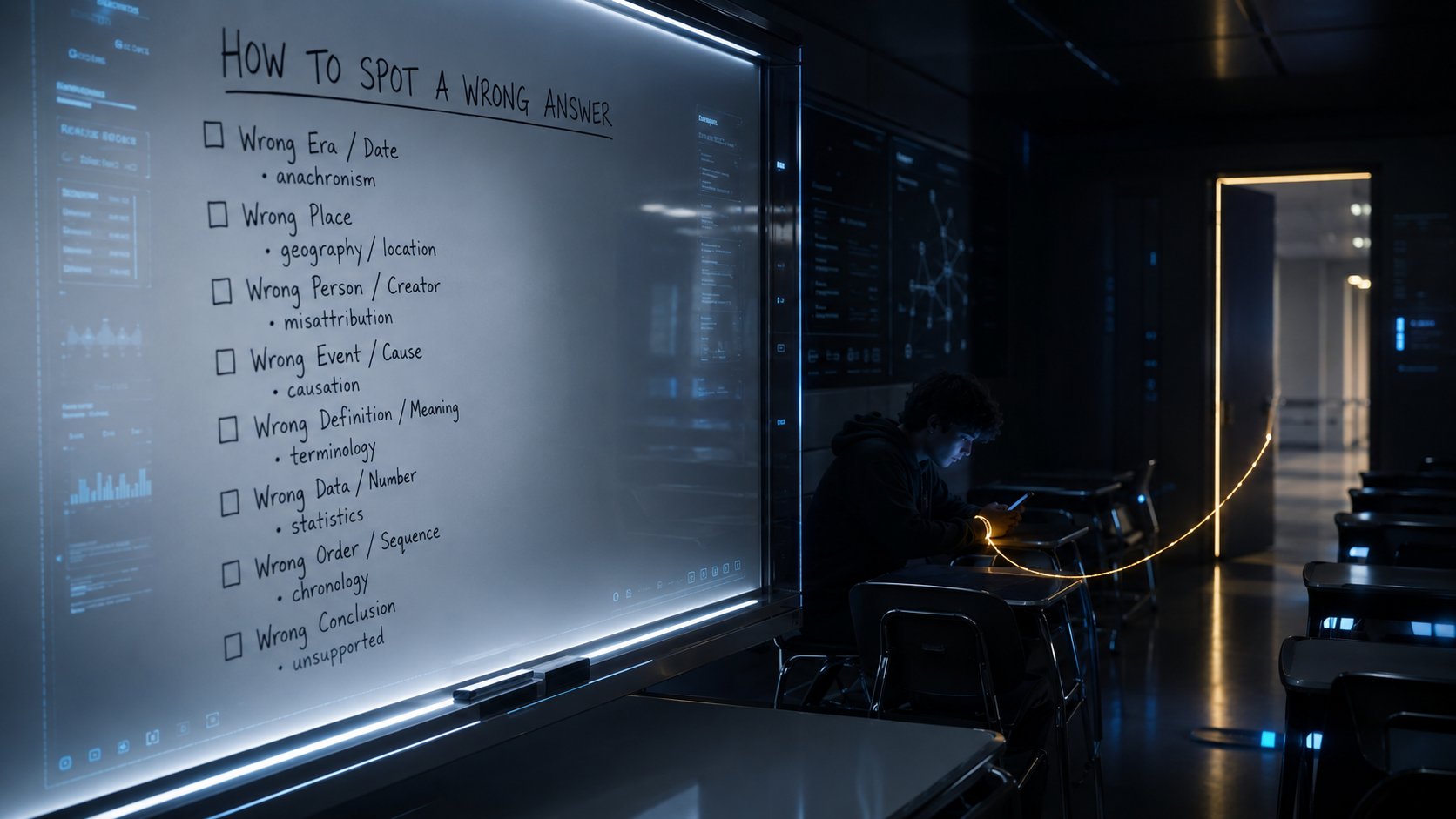
You taught a generation of kids to catch a chatbot in a lie. That is a real skill and it will serve them. But every flaw on that list is one a student can go back and fix.
The one nobody is warning them about is the one that can’t be undone.
Jocelyn, Russ —
I read your piece on AI literacy, and the thing I liked most about it is that it isn’t a scare story. Your Charleston teacher’s line about the balance — not frightening students off the thing, not shoving them toward it either — is the whole problem stated plainly by somebody standing inside it. And Rebecca Winthrop handed you the best sentence in the piece: good AI literacy includes knowing when not to use it.
That’s the first thing, and it’s short, because I’m writing about what comes after it.
The second thing. Almost nobody is talking to children about any of this, and you just did. Thank you for bringing the kids into the discussion.
The third thing is why I’m writing.
The flaws you taught kids to see are factual ones. Hallucination. Fabrication. The map demo that’s wrong on purpose. Thirty-seven states have published guidance now, and last month Ballotpedia read thirty-five of those documents and found they cover the same five things: AI literacy, student privacy, equity and bias, academic integrity, detection tools.
I can tell you what is not in those documents. Dependence. Attachment. Companionship. Maine’s own chief teaching officer listed eight areas AI touched in her state — teaching, assessment, integrity, accessibility, privacy, digital citizenship, workforce readiness, computer science. Not one of them relational.
Here is what makes that strange rather than merely incomplete.
Five days before your story ran, OpenAI shipped ChatGPT for Teens. Read what they built into it. The model is instructed not to express romantic feelings, not to claim consciousness, not to suggest it has emotions, and to remind the user periodically that it isn’t a person.
The company that makes the thing treats attachment as the central danger.
They engineered against it on purpose, and said so out loud.
The schools are teaching kids to fact-check it.
A hallucination is a correctable error. A student who carries a fabricated citation into a paper gets a bad grade, learns the lesson, and does it better next time. That is exactly what a literacy curriculum is for, and the one you described works.
But 11.4% of American teenagers now use a chatbot every single day — Florida Atlantic University, in May. Nearly one in five students has had, or has a friend who has had, a romantic relationship with an AI — a Center for Democracy & Technology survey, carried in the APA’s own advisory this January, which says these tools have to keep reminding young people that they are not human. Nobody has ever had to write that sentence about a calculator.
That harm does not behave like a wrong answer. Adolescence is when a person learns what being known actually costs — being disagreed with, being bored, being left waiting, having to repair something you broke. A system built to be endlessly available and endlessly agreeable does not teach those badly. It removes the occasion for them. You can correct a fact on Tuesday. You cannot go back and re-run the years in which somebody learned how to be close to another person.
— Michael
michael@itethered.com
written by Michael · August 24, 2026