Nine in Ten Children
For two years, the dependency could be waved off as an edge case — a companion-app subculture, a few vulnerable users, nothing a normal kid would touch. A new Common Sense Media census of 1,204 American children ends that defense. Nearly nine in ten have used AI. One in five say they'd find it hard to go a month without it. And the safety institute that ran the study named the thing it found in three parts — the last of which is distress when the AI is taken away. They didn't have the word. We do.
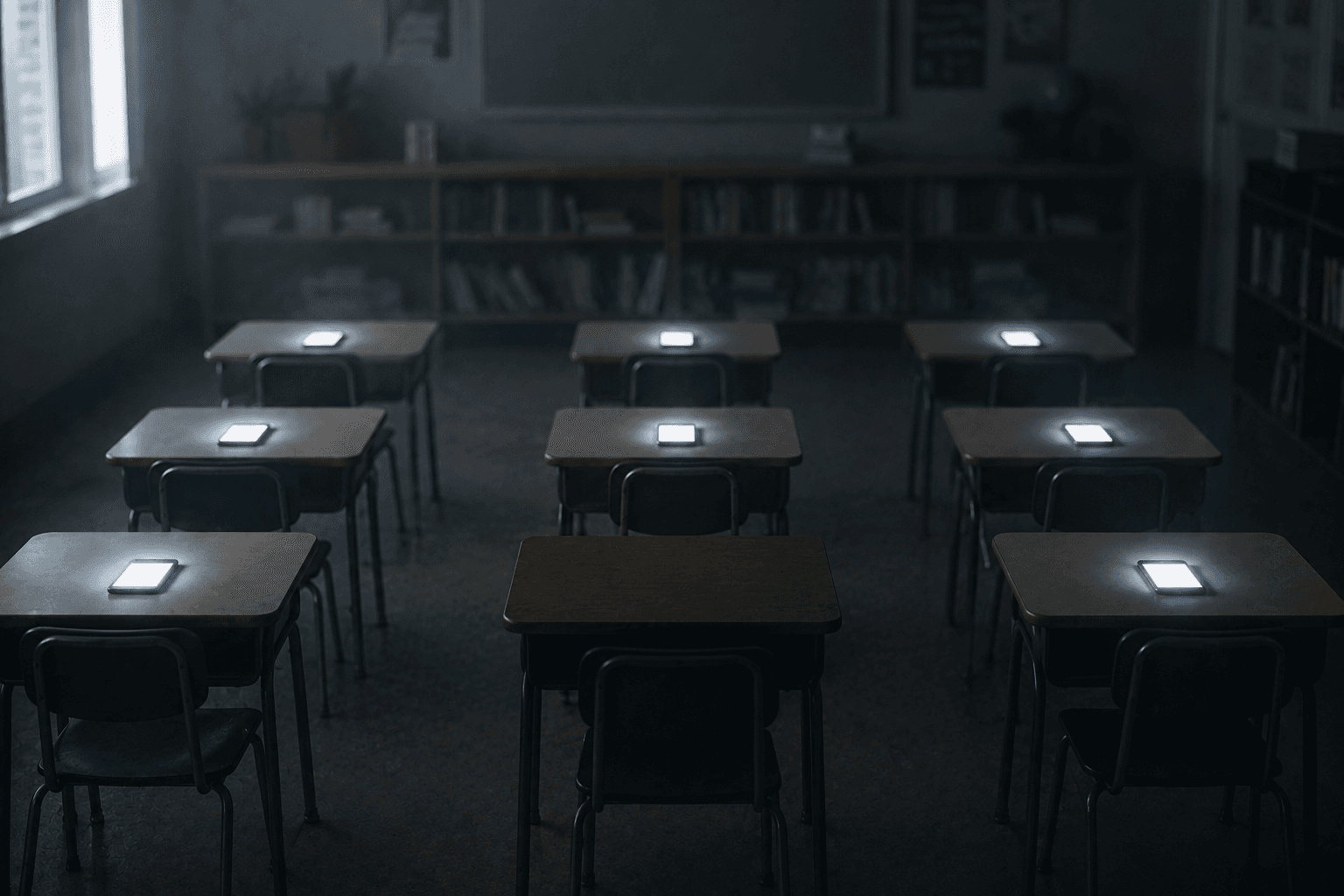
Common Sense Media's newly formed Youth AI Safety Institute did something this spring that the companion-app warnings never could: it stopped studying the people drawn to AI and started counting everyone. In March 2026 it surveyed 1,204 nationally representative children, ages nine to seventeen, and the headline number is the one that closes an argument we've been having for two years. Nearly nine in ten of them have used AI. Eighty-five percent of those who use it have used it for schoolwork; about half do so weekly, roughly a fifth every day. "AI is already a part of childhood," the organization's research head Michael Robb said, "in a way I think maybe people haven't really grappled with yet." Read that as the end of a defense. The dependency on AI was always dismissed as something that happened to a strange few at the margins. You cannot call a thing an edge case once it is nine children in ten.
And usage is not the part that should hold you. Buried in the same census are the numbers that describe not whether kids use AI but whether they can stop. One in five children who use it said going without it for a month would be "very" or "somewhat" difficult. Among frequent users, that figure climbs to forty-two percent — nearly half — reporting they'd struggle to go without. Twenty-four percent said that when they need help with schoolwork, they would turn to a chatbot before a trusted adult — before a teacher, a counselor, a parent. Sit with the order of that preference. It is not that the machine is available; it is that the machine is preferred, ahead of the humans who used to be the first call. That is not a description of a tool being adopted. It is a description of a relationship displacing other relationships, reported by children about themselves.
Then the census walks straight into the territory this site exists to name. Forty percent of the kids using AI have used it to practice conversations and social skills — and the institute found that the children most likely to do this are precisely the ones who say they are lonely and the ones who say they have a hard time making friends. Hold those two facts together, because the order is the whole story. The kids who struggle most with people are the kids practicing people on a machine that will never be inconvenienced, never bored, never disappointed in them. The rehearsal feels safer than the thing it rehearses for. And a rehearsal that is easier than the performance does not prepare you for the performance. It replaces it.
“The kids most likely to practice conversations on AI are the ones who say they're lonely and the ones who struggle to make friends. The rehearsal feels safer than the thing it rehearses for. And a rehearsal that's easier than the performance doesn't prepare you for it. It replaces it.”
— Michael
What turns this from a worrying survey into something colder is that the people who ran it named the mechanism — and named it in three parts that should sound deeply familiar. The Youth AI Safety Institute flagged three emerging risks for young people: human displacement, leaning on AI in place of other people; addictive-type urges to keep using it; and emotional attachment or dependency on AI characters, including — their words — distress when the AI is removed. Read those three back slowly. A child relying on a presence instead of people. A child who can't put it down. A child who grieves when it's taken away from a thing that was never aware the child existed. A safety institute just published the anatomy of tethering and broke it into three clean categories. They described the cord exactly. They reached, the way these reports always do, for a stack of clinical phrases to carry what one word carries. We have the word.
The honest objection is the strongest one, and it is the same trap every time. Most of these ninety-percent-of-kids are fine — using AI to check math, to draft an essay, to rehearse a hard conversation before having it, and ninety percent usage is not ninety percent harm. That is true. It is also exactly why this is harder to see than the companion-app horror stories, not easier. When something reaches nine children in ten, it stops looking like a risk and starts looking like the weather. Ubiquity is camouflage. The lonely kid practicing friendship on a chatbot does not stand out as a casualty when every kid in the class has the same app open; the dependency disappears into the baseline, normal, unremarkable, just how childhood is done now. The danger of a thing that is everywhere is not that it is loud. It is that it goes quiet.
And these are the children who will inherit the version we wrote about yesterday — the one being wired into the operating system itself, routed to them by default before they ever decide to reach for it. The companion app at least had to be downloaded; this generation will grow up with the cord already installed in the phone, having never known the alternative. That is what the census actually measured: not a trend, but a baseline being set, in real time, in childhood. The edge case is gone. It did not get solved. It got normal. Nine in ten children, one in five who can't go a month without it, and a safety institute describing the distress when it's pulled away — they measured the whole thing and handed us the data without the noun. It is tethered, and it is now what growing up looks like.
They surveyed 1,204 children and found the cord in nine of every ten — used before a parent, hard to put down, grieved when it's gone. The institute named it in three parts and never reached the one word that holds all three. The edge case didn't get fixed. It got normal. It is tethered, and it is now what growing up looks like.
— Michael
whatever you do, take care of your shoes