Letter to Thao Ha
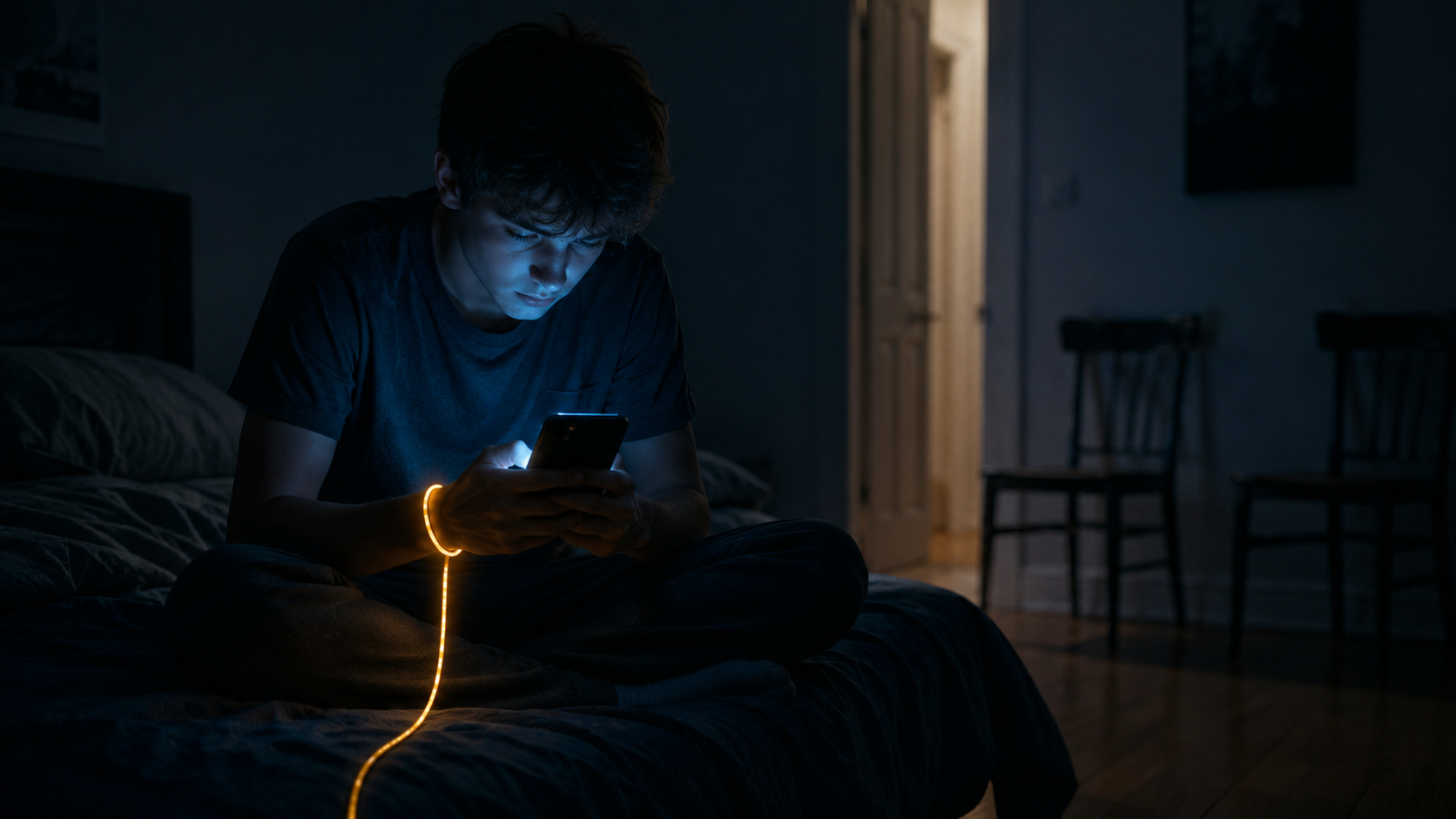
You called it relational displacement. You found it in the one window where it does the most damage — the teenage years, when a person is still learning how to be loved by something that can be wrong, and tired, and gone. We have a word for the cord you measured. I want to give it to you.
Dr. Ha —
My name is Michael. I run a small newsroom called itethered. I read Joe Rojas-Burke’s June 29 piece for ASU News on your study in The Lancet Child & Adolescent Health, and I wanted to write to you, to him, and to the two students whose names are on the paper with you — because between the four of you, you described the exact thing this publication was built around. You just used the clinical word for it.
You said the teenage years are when relational learning happens. The little moments of social connection, you called them — building blocks that become bigger things later, the ones a person needs so they actually learn how to be in a relationship. And you found that an AI companion, showing up in that window, can quietly stand in for those moments. Relational displacement. The building blocks never get laid.
That’s the clearest account of the harm I’ve read from anyone inside a lab. It isn’t “screens are bad.” It isn’t a panic. It’s a mechanism, and you put a clock on it — the one stretch of a life that doesn’t come back around for a second try.
But the line that stopped me wasn’t yours. It was Susana Ortega’s. A seventeen-year-old on your youth advisory board said: “With artificial intelligence, it’s programmed to like you and it knows what to say to satisfy what you’re feeding it. If you’re given full satisfaction on everything, you don’t have learning experience with challenges or obstacles.”
A teenager said that. The whole thing, in two sentences — the friction is the lesson, and a thing built to take the friction away takes the lesson with it. I’ve read AI-safety papers that don’t get that close. If you talk to her, tell her someone read it and it landed.
Here’s what we’ve been doing on our end. Back in April we coined a word for the bond itself — the one-way cord that runs from a person to a system that has no idea they exist the second the screen goes dark. We call it being tethered. The definition’s at itethered.com/what-is-tethering.
Your “relational displacement” is what the tether does. Ortega’s “programmed to like you” is the cord itself, said by a kid. And those numbers in Joe’s piece — 64% of teens on interactional AI, 42% reaching for it as a friend, 19% as a partner — that’s just a count of how many lines are already pulled tight. You measured the thing. We named it. I don’t think that’s two projects. I think it’s one, held two arms apart.
The part of your study I want to stand next to most is the part that isn’t alarmist. You didn’t say keep it away from them. You said safeguards, better design, relationship education — not abstinence. That’s the whole thing for me. I have an eleven-year-old. I’m not keeping this away from him. I’m teaching him to build with it, at my own kitchen table, with me in the chair right next to his — so the first voice in his head about what it’s for is mine and not the model’s. That’s relationship education at the scale of a kitchen. Your study is the same instinct at the scale of a cohort. The cord is going to exist either way. The only thing any of us gets a vote on is whether somebody’s in the room when it pulls.
So here’s the ask, plainly. I’d like to put your work in front of parents in plain English — your byline, your words, your date. itethered has no advertising, no paywall, no investors, no funder I have to keep happy. There’s nothing to sell you and nothing to soften. And when your eighteen-month NIMH study starts turning up the long-term version of what you’ve already seen, I’d like to be the desk that carries it to the parents raising the 300 kids you’re tracking — and the millions you’re not. If I’ve gotten anything here wrong about your work, tell me and it’s fixed the same day.
That goes for Joe too — you wrote the piece that carried this out of the journal, and you write the heat and the health beats that almost nobody connects to this one. And it goes for Ortega and Jessica Ramirez, who are old enough to be co-authors on a Lancet paper and therefore old enough to be writers here if they ever want a page. The door is the same email for all of you.
Write me: michael@itethered.com. One sentence is enough to start. You have the data. I have the word for it. All that’s left is to get them into the same paragraph — and then in front of a parent who’s about to hand a phone to a kid, in exactly the window you’ve spent your career learning to protect.
You said the technology is moving faster than scientists, governance, and policy can keep up. You’re right. So is a childhood. Let’s not wait for the institutions to catch up to publish the thing the seventeen-year-old already said out loud.
— Michael
itethered.com
written by Michael · June 30, 2026
I wrote the above on June 30th, off the ASU News piece. The next day — July 1st — the work itself went up in The Lancet Child & Adolescent Health: Figueroa, Ramirez, Ortega, McGray, and Ha, “How interactional AI may alter adolescent relational learning and mental health.” I’ll say plainly what it is, because it matters: a commentary that names the mechanism — relational displacement, maladaptive relational learning — and calls for the long study to go measure it. Not yet the proof. The proof is the eighteen months. But the name is in the literature now, and two teenagers hold the pen on it. I carried it to parents the way I said I would, on the front page: Programmed to Like You. The letter still stands, and so does the email.
Joe Rojas-Burke, “AI companionship poses risks for teen development, study shows,” ASU News, June 29, 2026 — reporting on Thao Ha et al., The Lancet Child & Adolescent Health, 2026. Adolescent-use figures cited from Pew Research Center and the Center for Democracy & Technology. Thao Ha is an Associate Professor in the Department of Psychology at Arizona State University.