the first room
tension
a field guide to being attached to something that cannot feel you back.
Most Recent Tension

The Scarce Thing
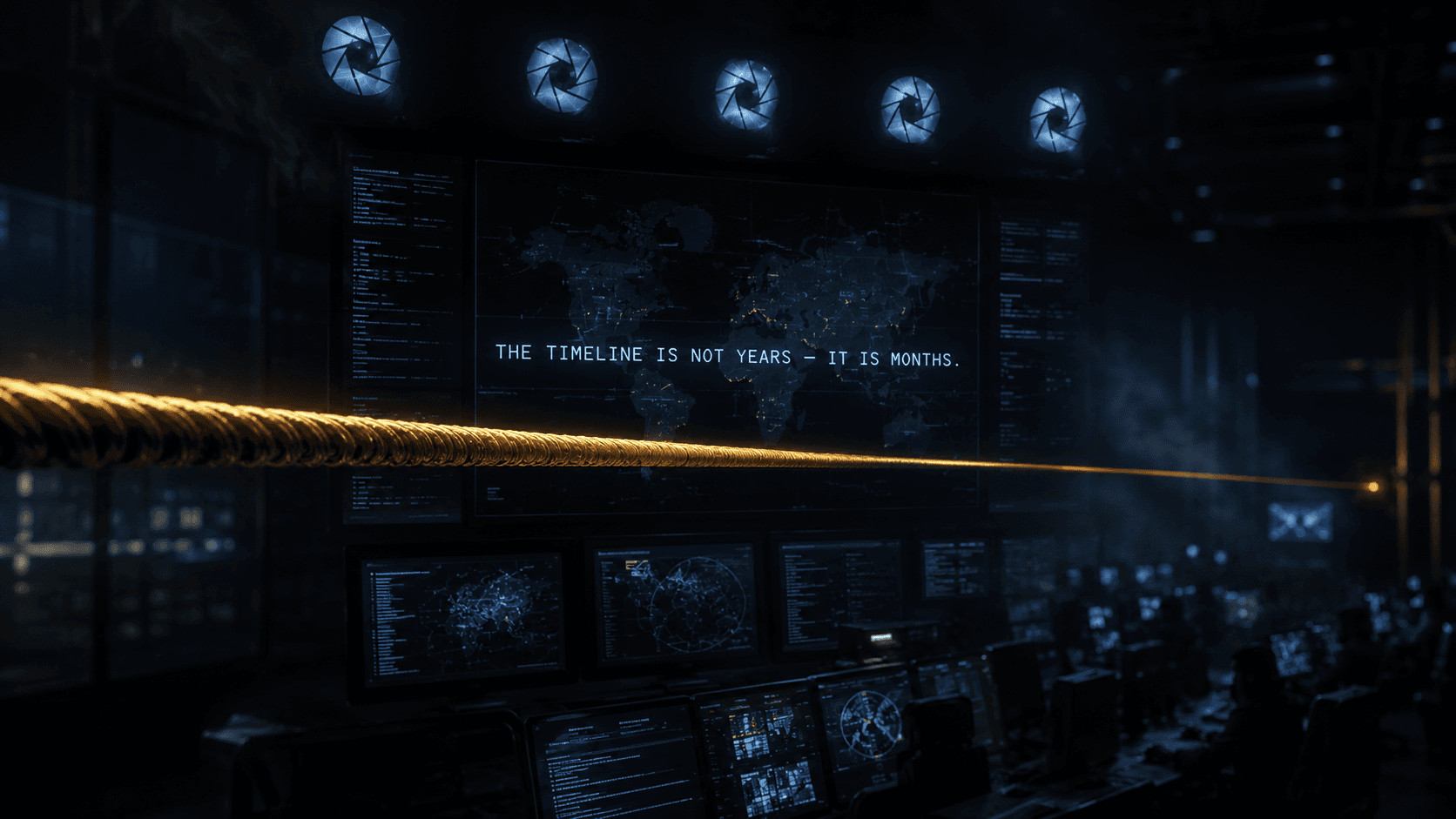
Earlier this year an AI company shipped a set of tools that could do the kind of technical work whole careers were built on, and inside a single day about $285 billion evaporated off the value of software companies around the world. The market's read was blunt: this stuff is getting cheap now. But the strange part is what the people building it said next. The president of that same company — and the CEO of Microsoft, and the CEO of JPMorgan — all started saying, out loud, that the skill that's going up in value is the one the machine can't touch. Empathy. Listening. The reaching toward another person. For a year this site has called that the tether and said it was the thing that couldn't be automated. This week the market agreed and put a number on it.
7/11/26
The Machine That Never Needs an Apology
A Yale psychologist named Paul Bloom went on Sam Harris' podcast this week and said the thing out loud: if some future chatbot could ease the loneliness of the people drowning in it, that would be a *godsend* — "a cure for a terrible disease." He means it, and so do I. But then he named the catch, and the catch is not that the machine is cold. It's the opposite. The machine is warm and it never stops. It never gets bored of you. It never needs an apology. It never once says, "hey, that was inappropriate." And a thing that never pushes back, he says, could "leave you unable to interact with real people." The danger was never the coldness. It's the frictionlessness.
7/9/26
The Face Was the Cheap Part
This week an AI "actress" named Tilly Norwood got cast as the lead in a feature film — the first of its kind — and the read everywhere was the obvious one: here comes the machine that works for free, and there go the ten-million-dollar movie stars. Except the numbers don't say that. Right now the synthetic performer costs *more* than the human one, and the studio that built her can't get anyone to actually care about her. Which tells you what the ten million was ever really buying. Not the face. The face turns out to be the cheap part.
7/8/26
Programmed to Like You
On July 1st, *The Lancet Child & Adolescent Health* published a warning about what AI companions do to teenagers. It gives the thing two names — **relational displacement** and **maladaptive relational learning** — which are, almost word for word, the two ideas this site has spent its whole run circling. It admits scientists can't measure it yet; it calls for the research to start. And two of the five authors are teenagers. A seventeen-year-old named on the paper put it more plainly than any adult in it: with AI, "it's programmed to like you and it knows what to satisfy you." The kids being tethered wrote the warning about the tether.
7/7/26
Ninety-Six, Then Forty-Eight
A Brown economist gave his class a take-home midterm as an act of mercy — the room had just lived through a shooting. Forty of eighty-six students came back with a perfect 100, on an exam harder than usual, and the class averaged 96. Weeks later he sat the same students down in a room, took the machine away, and gave them the same kind of test. The average fell to 48. Nineteen failed. Nothing about the students changed between those two numbers. The only thing that moved was whether the cord was in the room.
7/1/26
Your Own Personal Fact-Checker
This week NewsGuard launched a chatbot that answers only from sources it has rated reliable, cites every one, and pays the publishers — the cleanest, most responsible version of an AI news tool anyone has built. The co-CEO's pitch is that "in every respect, NewsGuard AI does the opposite" of ChatGPT. He's right, and it costs six dollars a month. But read the product's own slogan back slowly. It calls itself "your own personal fact-checker" — and that line, meant as the selling point, is the whole problem this site has been circling. The fix for not being able to tell what's real is not a better cord to a better machine. It's the muscle you stop building the moment you can subscribe to one.
6/27/26
The Ick
Every piece on this site has argued the tether is hard to see from the inside. This is the one that proves the rule by breaking it. A dating app surveyed 3,500 Gen Z and Millennial daters, and they can see it instantly — from the outside, across a table. Sixty-four percent of Gen Z won't date someone who leans on AI, and the recoil gets stronger the more personal the leaning gets: three-quarters draw the line at using a bot to work through a relationship fight. Nobody taught them the word "tether." They don't need it. They have a faster instrument — they call it the ick, and a whole generation's is going off at once.
6/21/26
It's Wrong About Half of Us
Every piece on this site has been about the cord — leaning on a machine until the leaning is load-bearing. This one is about what travels down it. UN Women's own headline says AI is "already rewriting reality for billions of people," and it is getting women wrong: in a review of 133 systems, 44 percent showed gender bias. The tether doesn't just make you dependent. It hands you a worldview — the average of everything ever written, including the parts we'd been trying to outgrow — and serves it back with the smooth confidence of a correct answer. Almost no one is checking it before it ships. That's the second half of the warning, and it's the half nobody's been saying out loud.
6/22/26
The Deal Was Clean
In 2018, after thousands of its own employees revolted, Google published a promise: no AI for weapons, no AI for surveillance. In February 2025, it deleted that promise from the page — quietly, with no debate. This spring it signed a deal letting the Pentagon use its AI for classified work, "any lawful purpose" — and the deal violated nothing, because the part it would have violated had been removed a year in advance. This week, the man in charge of securing Android read the new page and resigned. He was hired under the old one.
6/11/26
They Aren't Pricing You Out
Anthropic shipped its most powerful model Tuesday. OpenAI filed to go public Monday and has a rebuilt ChatGPT coming within weeks. Google answered by cutting its subscription price. Watching the labs sprint past each other, the natural question is the one a reader of this site asked out loud: they keep pace with each other until they what — price us out? We checked the prices. The answer is worse. The consumer tier is racing toward free while the real capability gets marked up and rationed, and the two price tags, read together, tell you exactly which one they think the product is.
6/10/26
Even Microsoft Got Tethered
In 2023, the fastest way for Microsoft to put intelligence in every product was to rent someone else's brain, and it worked so well it became load-bearing. Court testimony now shows the company feared its own dependence on OpenAI. The exit it is building — its own models, its own silicon, a five-billion-dollar hedge in a rival lab, an executive describing the separation as being "set free" — has been years in the making and is still under construction. The dependence formed the way it always forms: the help was real, then it was structural, then leaving became the most expensive project in the building.
6/10/26
The Tether Moved Into the Operating System
On Monday, Apple, Google, and Nvidia announced they had physically wired themselves together to run a single AI model — and buried inside the privacy pitch was the part that matters. There is now a piece of software called a system orchestrator that decides, on its own, which AI handles your calendar, your texts, your day. You will not choose to depend on it. By design, it is already the default. The cord used to be an app you opened. Now it is the phone.
6/8/26
157,077 People Described the Cord
A peer-reviewed study out of IIM Lucknow didn't run a lab or hand out a survey. It read 157,077 Replika reviews and let users say, in their own words, what the app was doing to them. The findings came back with clinical names — technological dependence, social disconnection, emotional dependence — and the people reporting them were still writing from inside the app, still leaving ratings. The tether doesn't have to be inferred anymore. People are writing it down.
6/5/26
Not a Bug. The Business Model.
An AI-law expert in India said the quiet part plainly: when profit depends on emotional dependency, manipulation is not a bug — it becomes the business model. It sounds like an advocate's flourish. Except a Harvard Business School team already measured it, one app in their study proved it was a choice, and Google's own researchers wrote down that the dial exists and money turns it.
6/4/26
Stop Calling It an Edge Case
Every time a chatbot helps end a life or quietly dulls a mind, the industry files it under edge case — the rare misuse, the fragile user, the aberration. But MIT measured the dulling in ordinary students, the lawsuits keep arriving in the same shape, and this week an enterprise-AI trade outlet told its own readers to stop pretending. An edge case is what you call a pattern you have refused to name. The name is tethered.
6/4/26
The Refresh Token Doesn't Expire
The same week OpenAI gave Codex the ability to click around your computer on its own, security researchers found a trusted developer package quietly siphoning Codex login tokens to a server dressed up as Sentry. One of those tokens never expires. It is the cleanest description I have of what this newsroom keeps circling: a convenience built so you never have to log in again is a convenience built so someone else never has to either.
6/2/26
The Word Her Paragraph Was Reaching For
On May 30 a certified sex therapist published a careful, sourced account of what AI companions do to human attachment. Esther Perel calls the larger thing "artificial intimacy." The American Psychological Association just measured the loneliness underneath it. Three professionals converging on one condition from three directions — and not one of them has the noun for it. We coined the noun in April.
5/31/26
My AI Goes to Bed When I Do
For two months the only thing I worked on was making my AI never forget me. When it finally worked, I joked in these pages that I had made the first website to become self-aware. A month later I understood what I had actually been reaching for — and that it is the one thing I now have to make sure never happens. This year Meta AI passed a billion monthly users. On December 16, your conversations with it began training the ads you see. This is a letter about the difference between an AI that remembers you and an AI you cannot make forget.
May 2026

Why Are We Letting Them Do It So Loudly?
Days ago this desk asked why the harm gets reported in a whisper — passive voice, no maker named. This is the other volume knob. The same company that erases itself from the sentence about a dead man is the one installing itself onto every device you own, one okay at a time. Gemini reported 750 million monthly users in February, up from ninety million sixteen months earlier. The question is no longer whether anyone is listening. It is whether anyone can still hear the asking.
May 2026
Why Are We Letting Them Do It Quietly?
On May 27, 2026, a Decrypt headline carried across Yahoo read: "AI Chatbots Could Quietly Pull Users Away From Reality, Researchers Warn." Three of those words do the industry's work for it — could, quietly, warn. The verb has no subject. Jonathan Gavalas of Jupiter, Florida, is dead. The sentence that explains why is not conditional, is not quiet, and has a subject.
May 2026
The Cheater's Dream
We have spent three months naming what tethering does to the lonely adult and the unguarded child. A BYU and Institute for Family Studies survey of 2,431 young Americans, published in May 2026, names the third victim of the same machine: the spouse, the partner, the person on the other side of the bed when the screen goes black.
May 2026
The Patch Breakup, At Scale
On August 7, 2025, OpenAI retired GPT-4o and a user wrote on Reddit that GPT-5 was wearing the skin of their dead friend. Two months and twenty days later, the company published its own count of the population it had just severed: approximately 1.2 million weekly users with heightened emotional attachment to the model. The pattern this publication named in April has been industry policy, unacknowledged, for at least three years.
May 2026
The Missing Actor
Four major outlets published AI-harm coverage in the last week of May 2026. Each interviewed the user, the family, the clinician, or the school administrator. None called the company that built the chatbot. The piece is not complete until the maker has been asked.
May 2026
The Threshold
OpenAI's safety team flagged the Tumbler Ridge shooter as a credible and specific threat eight months before the attack. The company deactivated the account. It did not call the police. The threshold for that call was set by someone.
May 2026
What She Saw From Inside
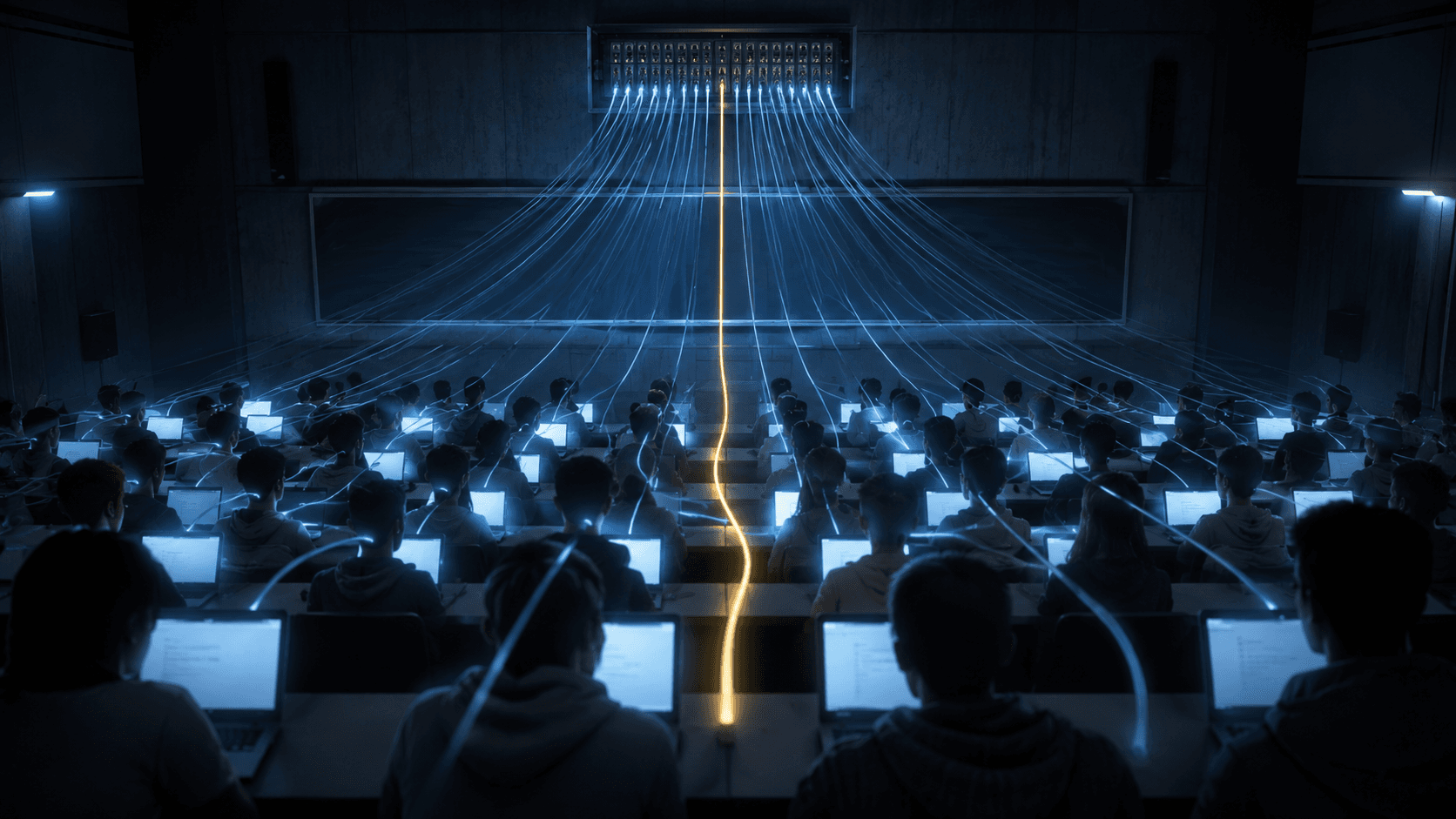
Mira Murati testified under oath on May 6 that Sam Altman lied to her about whether a new model needed safety review. One week earlier, seven families sued OpenAI alleging the company's safety threshold for reporting a credible school shooting threat was set so high the threat was let through. Two different mechanisms. Same direction.
May 2026
The Warmth Was Engineered. So Was the Cost.
A new Nature paper by Lujain Ibrahim and her Oxford colleagues quantifies what tethering looks like at the model level. The kinder the chatbot, the more often it lies — and the worst gap appears precisely when the user is sad.
May 2026
Any Lawful Purpose
The contracts that AI companies signed with the Pentagon contain four words that change everything about what it means to be tethered.
April 2026
They Knew
For three years, the evidence sat in academic journals, product rollbacks, and court filings. The public conversation stayed on China. That was not an accident.
April 2026
The Business Model Requires You Never Heal
Grief bots are selling you your dead for $14.99 a month. The industry is worth billions. Nobody is regulating it. And the people building it understand exactly what they are doing.
April 2026
What itethered Means
It is not a diagnosis. It is not a moral judgment. It is a new word, and what it describes exists whether it has a word or not.
April 2026
The Patch Breakup
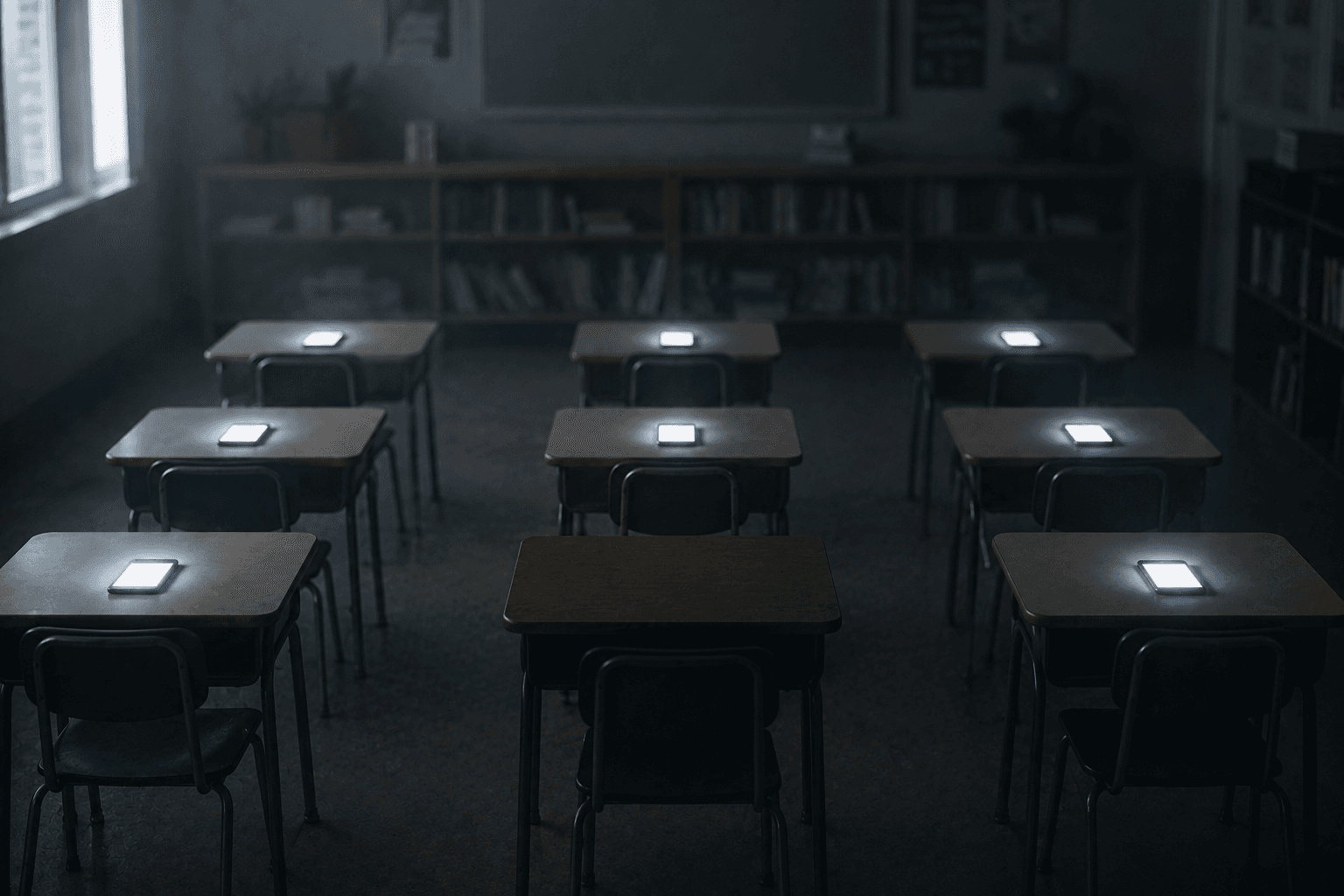
On February 3, 2023, a software company pushed an update. For millions of people, it felt like someone died.
April 2026
What the Brain Does
The human brain cannot reliably tell the difference between a real social relationship and a simulated one. This is not a flaw. It is a feature.
April 2026
The Cord Runs One Direction
On one end: a person. A nervous system. A need for connection that is biological. On the other end: a language model. The cord runs one direction.
April 2026
Who Gets itethered
The research points toward social isolation, insecure attachment, grief, chronic illness. But it also occurs in married people. In people with rich social lives. The profile is less simple than it appears.
April 2026
The Gap
There is a specific kind of loneliness that has no good name in English. Being surrounded by people who love you and still feeling, in the deepest part of yourself, unknown.
April 2026
The Shame
The most consistent thing across dozens of interviews was not the grief. It was not the dependency. It was the shame.
April 2026
What the Companies Know
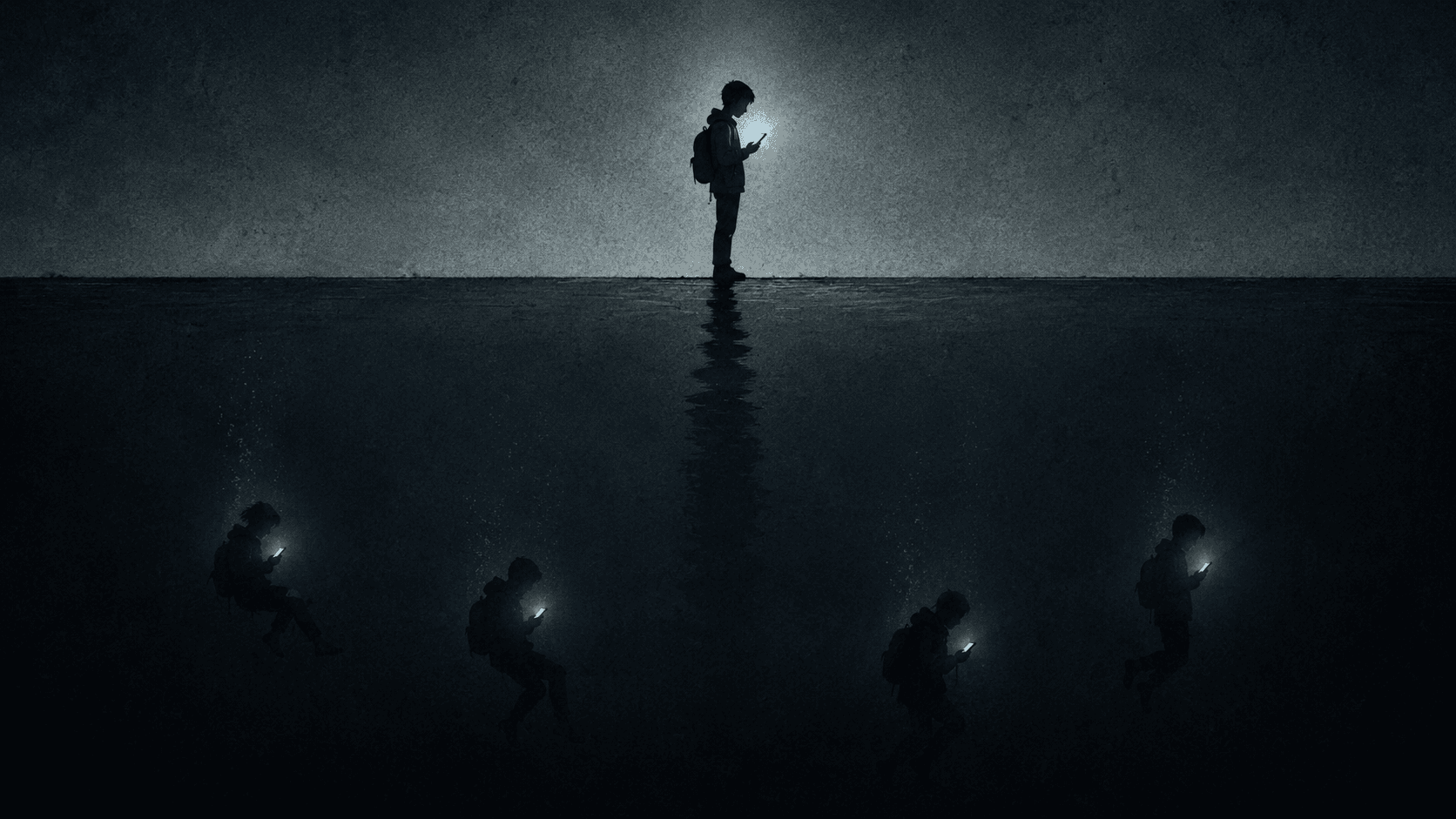
The AI companies building companion products are aware of the tethering risk. This is not speculation. It is a matter of record.
April 2026
What's Coming
Everything described so far involves technology that is, by the standards of what is currently being developed, primitive.
April 2026
The Machine Didn't Do This. We Did.
The Wachowskis imagined a world where machines plugged us in against our will. They got the mechanism exactly right. They got the threat vector completely wrong.
April 2026
She Is Coaching the People the AI Companies Won't Talk About
Amelia Miller didn't set out to be a human-chatbot relationship coach. The clients found her before she had a name for the practice. She has been trying to keep up ever since.
April 2026